How do you keep up with the pace of change in software development tools?
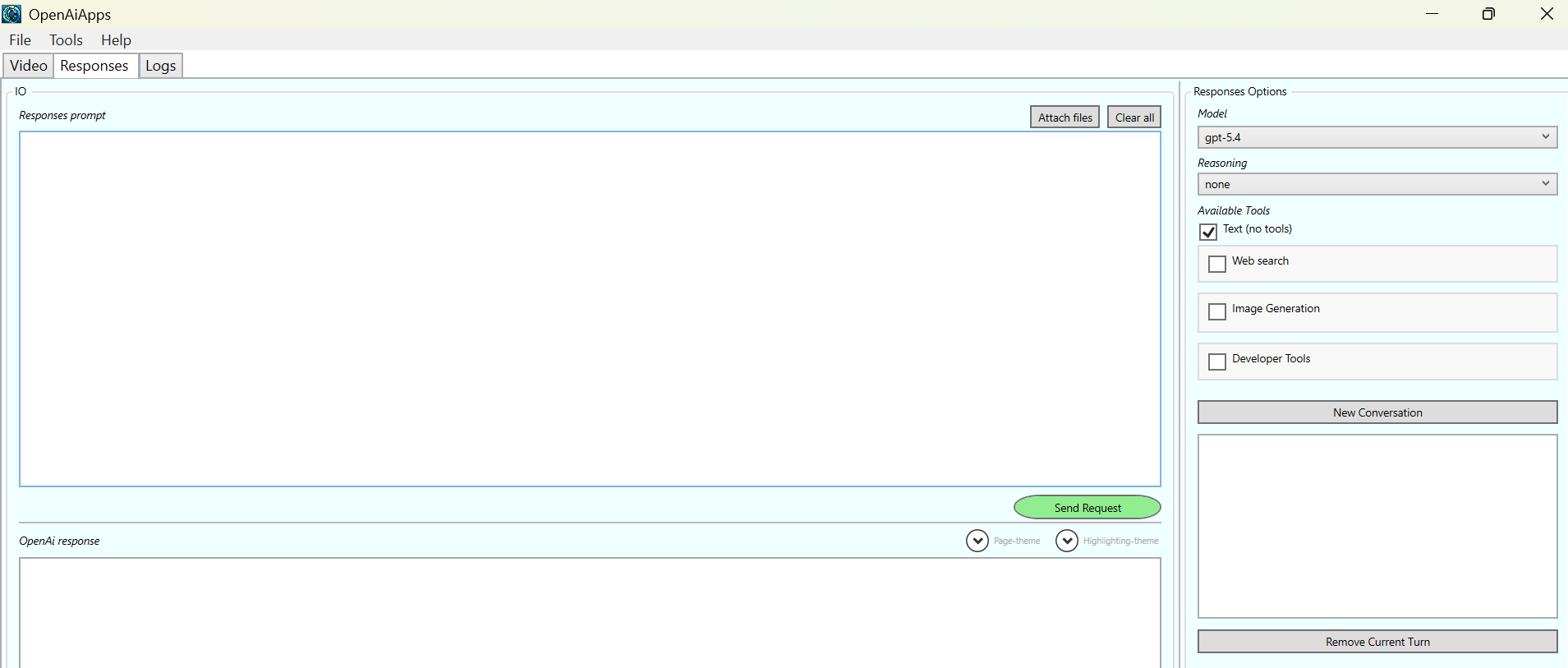
I was working on an app for personal use that uses OpenAI’s Responses API. I started with read-only functions around March 26, 2026, so the AI could get information about the project locally. At the time, I didn’t dare let it write or execute anything. I used this "readonly"-manifest for quite a while. Until...
That changed a couple of weeks ago: I added the ability to write and execute code, using functions such as create_dotnet_solution, build_dotnet_project, run_dotnet_project, and RequireExecutionConfirmation. I did this because I often wanted to generate a skeleton for a test project or simply try something out. It’s not perfect, but it gets things done: https://github.com/oopsypoo/openAIApps.
Before I added the write and executable features, I used a combination of the Claude Desktop app, my own app (using the Responses API with the the lowest-cost/most intelligent model available to me at the time), and, if I remember correctly, GitHub Copilot. I was using all the free tools and tokens I could get my hands on. What can I say? I guess that’s what most people do: use these tools as far as they’ll take you.
Then I got to thinking: I want—or need—this to be cross-platform. Since I was using .NET, WPF, and C#. I wasn’t sure what to do or how to turn it into a cross-platform application. I had experimented in the other direction: using Qt and MXE to cross-compile a standalone Windows application on Linux.
Either way, it seemed like a big leap. So I consulted Lumo, Proton’s AI chat companion, about how to refactor my WPF app to make it cross-platform. It suggested an approach that led me to Avalonia, or Avalonia UI. I started reading about it and thought, “Okay, let’s just try it out.”
I created an account at AvaloniaUI.net, got a license key for a free month, and got started. (I’m still not sure what the license key is for) I asked my own app (using GPT-6-Luna) for best practices for converting a WPF application.
Here’s what I did:
Cloned my solution and gave the copy a new name.
Removed unnecessary or outdated “fluff,” such as the video endpoint, audio modules, speech-to-text, and text-to-speech—things I was no longer interested in.
Started refactoring parts of the code that Avalonia doesn’t support, such as MessageBox, along with other Windows-specific calls.
Created a new project in the solution for the Avalonia version.
Copied the files over one by one, leaving the UI for later. That’s when the “fun” started. I’d reached the limits of what I knew how to do on my own; without help, I’d have needed at least a month to get further.
Added the Avalonia MCP server to the project and Visual Studio.
Configured GitHub Copilot to use my preferred model, GPT-6-Luna—the cheapest option I knew of. I wanted to compare its results with those from my own app.
Let GitHub Copilot work through the conversion, fixing one module, view, or class at a time.
Two days later, I had a first working Avalonia version. I then created a separate Visual Studio solution without the WPF project and put it in a new repository (oaiResponsesAvalonia)
Partway through, I ran out of free tokens. I subscribed to GitHub Copilot for a month to get more. I had to finish the work; I couldn’t wait for more free tokens.
What can I say about GitHub Copilot? Unbelievable. My own app could do similar work, but Copilot’s results seemed much more polished—and, more importantly, more correct. It seemed to make use of all the analyzers and other tools available to it. I’m not quite sure how else to describe it.
I use a dual-boot setup with Windows 11 and Kubuntu (). Developing a cross-platform app is a pain when I have to reboot just to test it. Of course, I could run a virtual machine, but that isn’t an option for me at the moment.
Testing
The first problem was the WebView2-control. The migration to NativeWebView was challenging. Without going into too much detail, Copilot solved it by running a local web server on localhost. Maybe a model like "terra" or "sol" would have solved this particular problem in the migration?
It probably took me a week to test and find all bugs and errors. Copilot had left out a few button connections, so some buttons didn’t work; I restored them as I found them. All in all, though, I was very impressed.
The only part of the Linux-specific work where I turned to another AI was creating the “Open With” context-menu entries. Copilot, using GPT-6-Luna, couldn’t get it working. I tried several times to fix the problem with Copilot in Visual Studio, but without success. So I went back to Claude and gave it access to my files, so it could see what I was doing. Claude suggested a solution, which I implemented. It worked, and the result was quite nice. Thanks, Claude!
Anyway, back to GitHub Copilot. After thinking about the challenges of cross-platform development, I also set up remote access from my laptop to my Linux machine using xrdp and XFCE (). I’m not a big fan of laptops—the screens are too small—but it works.
The next time I logged in to my Kubuntu () machine, I thought I’d try the GitHub Copilot desktop app for Linux. I still had some tokens left, and I wanted to see what it could do.
I logged in with my GitHub account through the "app"; had it clone the latest version, and asked it to take a look. Its first commit, on a new branch, was titled “Simplify Developer Tools permissions UI.” It turned my rather complicated set of checkboxes—one for each permission, such as read, write, and list—into just three: read, write, and execute.
So what do you do? You talk to it. It’s not quite like using Copilot in Visual Studio; it feels more like a much better version of my own application. I’m not sure what I felt at that moment.
I added another capability to my app using the GitHub Copilot desktop app: MCP server support. I chatted with the AI about the solution, we came to an agreement, and it implemented the change. No errors. Nothing. I could now add the Avalonia MCP server, so I could eventually continue building a cross-platform version of my app.
But here’s my question: What’s the point? Development is moving so fast. I didn’t even know the GitHub Copilot desktop app was that good. I’ve heard a lot of good things about Claude and its paid version, but I’d never really had the chance to try it out.
After trying the GitHub Copilot desktop app, I completely lost focus on why I wanted to build my own application. Maybe I should go outside and see some sunshine instead. I guess that’s why I’m writing this.
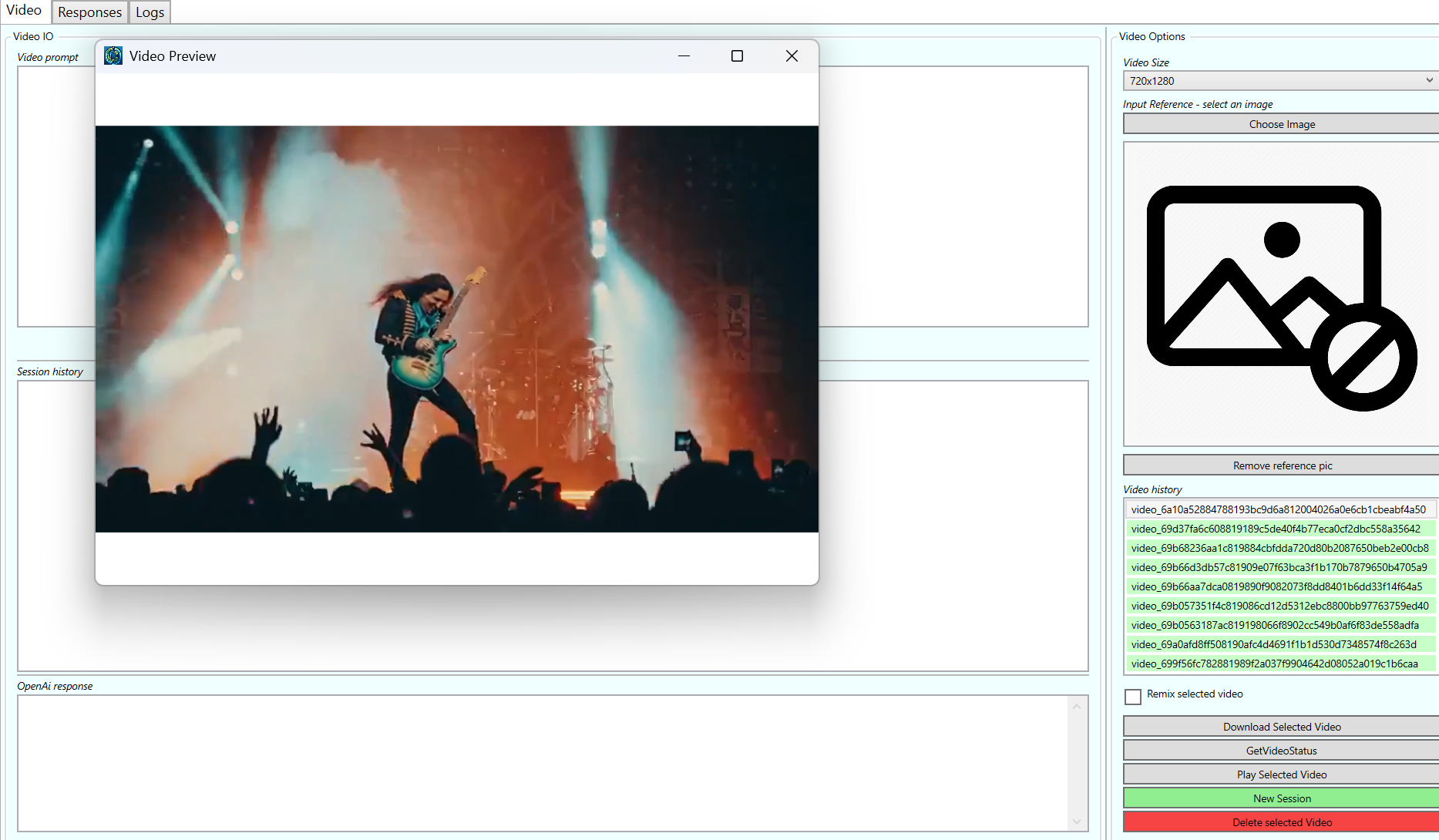
When I saw, the video-endpoint/got access to it, I wanted to use it right away. This might not be accurate: I wanted to make an interface, using the video-endpoint. I'm not good at video-/image-prompting, but it is fun; and it's a useful if you want to create/produce something for a web-site or anything else that is public, without getting sued or threatened in any way.
It's been a long time since I added anything to this site, so there was a lot to update. PHP, Joomla (2x), and some extension upgrades. A lot of fun stuff.A good thing Was that it went very well. Not like the "tomprat"-upgrade where I had to create a new site actually. Anyway...last time I wrote something I was going on about gpt4o, and now it's gpt5.4 (newest is gpt5.5), but I wanted to say something about gpt5.4 since I have used this model a lot the last months. My app "openAiApps" has also changed a lot in 2 years. OpenAI - Whisper is gone, assistant is gone(actually it never made it to the main app, and a good thing that was since it's deprecated now. OpenAPI, Vision is gone. I think it always was just a beta). I removed DALL-E.
I added "Vision" to my "OpenAiApps". It's interesting, and you can use it for a lot. Analysis, info, comparisons...my app is very simple and I have not made any "follow-ups". I.e. you cannot follow-up with any questions, but below are some examples of usage.
So I tested GPT-4o by creating a script in Python. I haven't used Python that much; almost none at all, but my thought was that OpenAi likes(it's very proficient) in python, and I wanted it to be able to run it on most platforms. In my case Windows and Linux.
I've tried out OpenAI's Whisper. That is: I made an interface using C# and WPF. Like all the articles I've written about OpenAI it's the same mechanism here as the other ones. My interface looks like all the other interfaces.
I've already written a little about what my WPF-application looks like. But I'm going to finish off here since I did some changes to it. By the way: A good reason to write your own is that if you use the "the playground", it will cost you. There are limits I found out, after testing it. You have a certain amount of credits that runs out really fast if you're "messing around". If you run an application using their API, it will cost you less. From what I experienced yesterday.
The DALL-E API can be divided into three parts:
Image generation, based on prompt. Generates an image based on your prompt. Options: number of images and size
Image variations, based on uploaded image. Creates variations of the image that you choose. Options: number of images and size
Image edit, based on prompt, original image, and image mask. Options: mask. (Not sure how this works without a mask)

 . What can I say? I guess that’s what most people do: use these tools as far as they’ll take you.
 . Since I was using .NET, WPF, and C#. I wasn’t sure what to do or how to turn it into a cross-platform application. I had experimented in the other direction: using Qt and MXE to cross-compile a standalone Windows application on Linux.
 ). Developing a cross-platform app is a pain when I have to reboot just to test it. Of course, I could run a virtual machine, but that isn’t an option for me at the moment.
 !
 ). I’m not a big fan of laptops—the screens are too small—but it works.
 ) machine, I thought I’d try the GitHub Copilot desktop app for Linux. I still had some tokens left, and I wanted to see what it could do.